01 / Operating friction
What breaks before AI is useful
- Requests enter through multiple channels with inconsistent labels, missing fields, and unclear urgency.
- Teams spend time asking the same qualifying questions before work can begin.
- Ownership and escalation depend on memory instead of a visible workflow state.
02 / Deployment pattern
How the workflow becomes operational
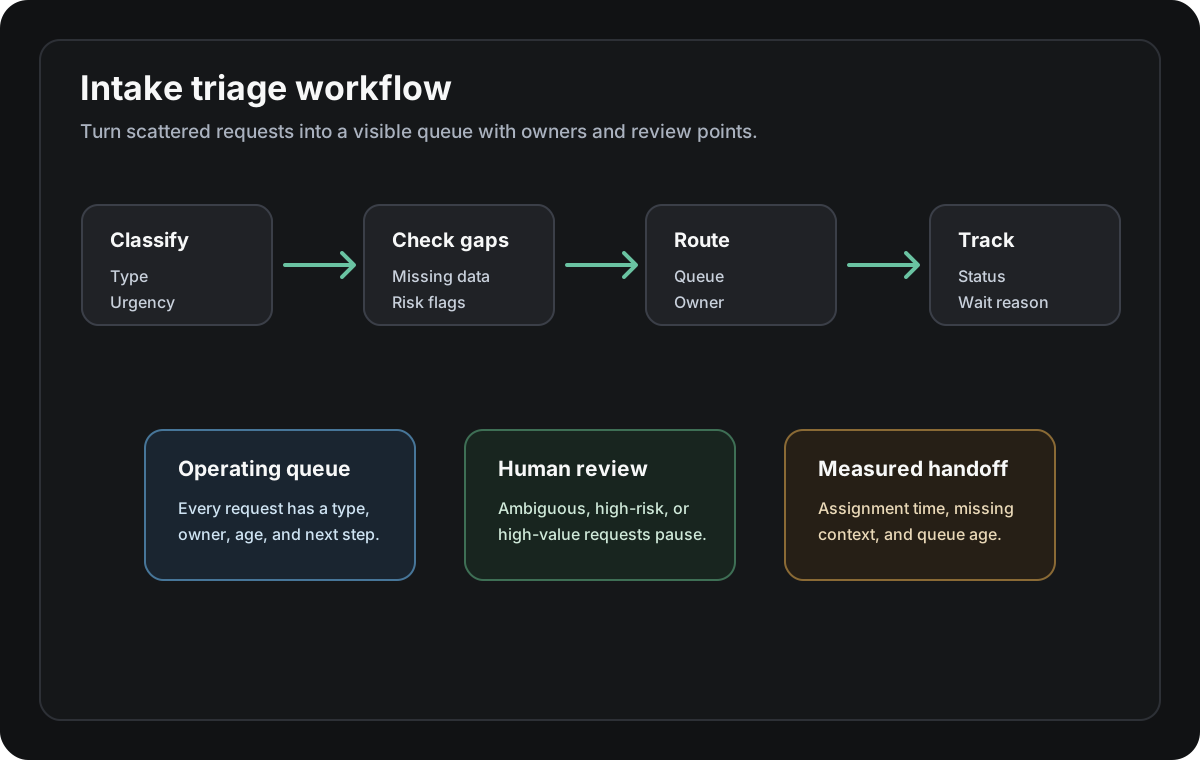
- Classify request type, urgency, source, customer context, and required next step.
- Detect missing fields before the request reaches the wrong person.
- Route each request to the right owner or queue with a short operating summary.
- Escalate ambiguous, high-risk, or high-value items for human review.
- Track status so leaders can see where requests wait and why.
03 / Measurement layer
What proves the workflow improved
- Time from request received to assigned owner.
- Percentage of requests with complete context on first pass.
- Manual clarification messages avoided.
- Queue age by request type and owner.
- Escalation accuracy for sensitive or ambiguous work.
04 / Human controls
Where judgment stays explicit
- Human review for unusual requests, customer commitments, and policy exceptions.
- Routing rules that can be inspected and changed by operators.
- Status logs that separate AI classification from human decisions.
05 / Review
Map this against one real operating problem
Bring the workflow, the current tools, and the part of the process where context gets lost. Andes Labs will define the productivity target before proposing a system.