01 / Operating friction
What breaks before AI is useful
- New requests arrive across forms, calls, email, and text threads without a shared recovery queue.
- The team loses source, urgency, service interest, and contact history before anyone follows up.
- Owners cannot see which leads were recovered, which went cold, and which need escalation.
02 / Deployment pattern
How the workflow becomes operational
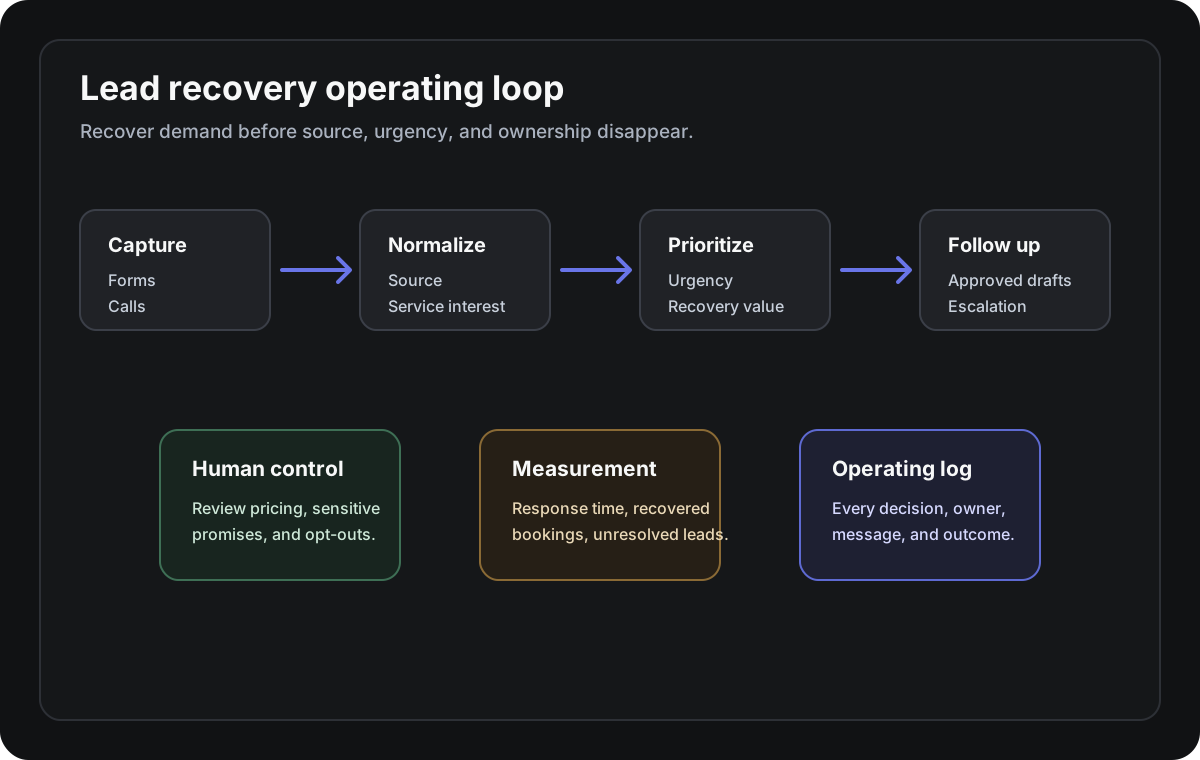
- Capture inbound lead signals from the existing form, inbox, phone log, or CRM.
- Normalize source, service interest, urgency, contact history, and missing context.
- Score recovery priority so the team works the highest-value open loops first.
- Draft or send approved follow-up messages with human review for sensitive cases.
- Log booking, no-response, closed-lost, and unresolved outcomes for leadership visibility.
03 / Measurement layer
What proves the workflow improved
- First-response time by source.
- Follow-up completion rate within one business day.
- Recovered bookings or qualified conversations.
- Unresolved lead count and age.
- Manual triage steps removed from the team.
04 / Human controls
Where judgment stays explicit
- Human approval for pricing, sensitive promises, regulated context, or unusual requests.
- Clear opt-out handling before any repeated outreach.
- Decision and message logs that show what happened and why.
05 / Review
Map this against one real operating problem
Bring the workflow, the current tools, and the part of the process where context gets lost. Andes Labs will define the productivity target before proposing a system.